

For my “thing” paintings, I wanted to use objects that represented the current season. In the past, I found it difficult to be inspired by a season other than the one I was experiencing at a particular time. Painting a snow scene in August makes it impossible for the subject matter to truly resonate. I chose a skull with a shrub, a small plastic pumpkin, a red bowl dish, and an orange tablecloth napkin as my objects of inspiration. As the paintings depict a particular season, I wanted to include objects that fit the autumnal color scheme. However, it was important to include complimentary colors for shadows and colors across the painting. As one can clearly see the green plant on top of the skull, I knitted different greens into the painting. I included the green color in the red dish’s shadow, the show on the top right of the box and on the red dish’s left cast shadow. By doing this, the color was moving throughout the painting. In previous paintings, I was painting and studying the inside of boxes and objects inside of boxes. I admired the juxtaposition and relationship between objects, the space in the object and the dramatic light sources. By setting the scene in the box, I was enclosing the environment and able to recognize interesting relationships being played out. For instance, the skull in the right corner has an interesting relationship with the box. I manipulated the light course to create a dramatic cast shadow reflected on the box. As one can view, the skull’s cast shadow includes the circular head figure and the plant. By painting two versions of the same painting at the same time, I was able to see what concepts and ideas I preferred. If one concept was stronger in one painting, I would try to include it in the other painting. Or I would leave two slightly different depictions in the painting. In other words, this painting became two drafts.
Greenery Narrative


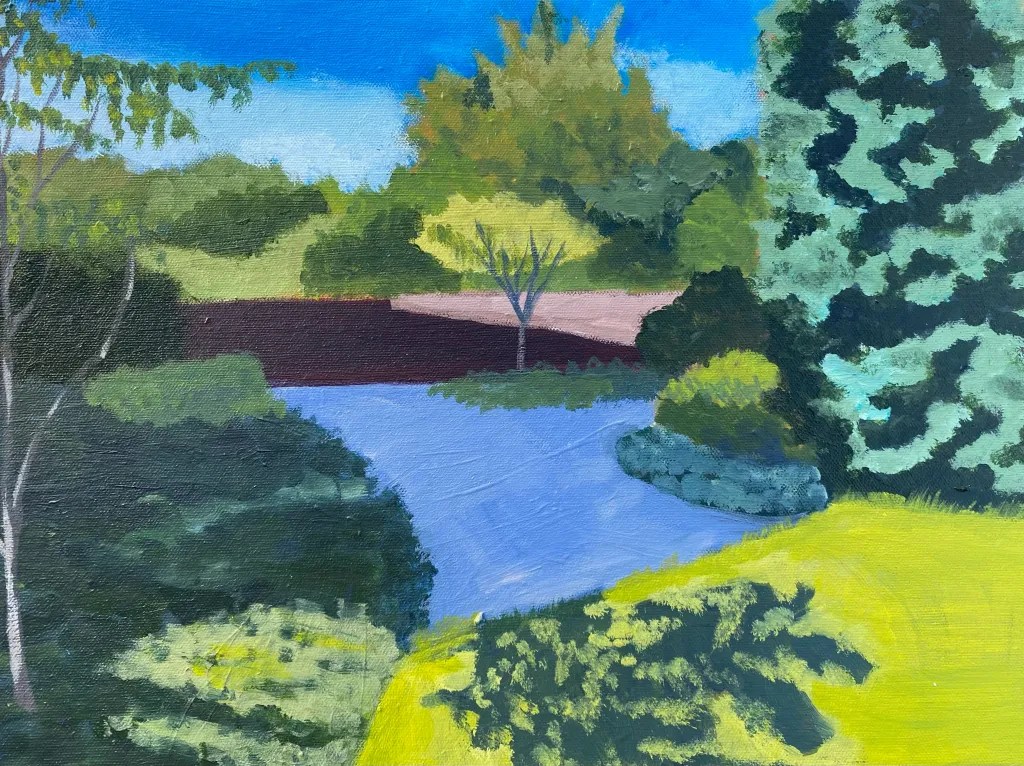


During this semester, I struggled, in previous paintings, with discerning structures within the composition. This assignment was my attempt to remedy this situation. For this assignment, I was interested in projecting a variety of natural subjects interacting with their environments. I attempted to clearly differentiate subjects from one another. Rather than focusing on details, I concentrated on discerning objects. For instance, there are different elements of color, shape, cast shadows, and hue saturation in the grass of the weeping willow painting. The detail of the grass was somewhat overwhelming to my eye; it was such a large expanse of one color. This seemed to hide the various objects and structures contained within that green expanse. In order to understand the different structures within the grass, I squinted my eyes. When I squinted my eyes, I saw the structures that were evident within the overall green space. I experimented with different paint brush textures throughout my painting. Within the weeping willow tree painting, I juxtaposed light green elements with dark blue, and highlighted the green of the willow tree to create spatial depth. I used a downward brush stroke to create movement within the tree. However, the grass below the tree has an upward brush stroke movement. By doing this, the natural elements create opposing directions. earthy tone of Raw Sienna paint. To unify the pieces, I used undertone and the shared light of Raw Sienna. While the painting is primarily filled with green elements, I left small exposures of Raw Sienna seeping through the entire composition.
Seneca Lake Studies


